Study / Projects & Case Studies
Château d’Hyères
Hyères · Var
18,038 fish remains studied in total
Archaeoichthyological study of the medieval assemblages from Château d’Hyères, undertaken as part of doctoral research into fishing practices and fish consumption in medieval Provence.
- Location
- Provence-Alpes-Côte d’Azur · France
- Documentation
- Report available
01 / The assemblage
Study context
Château d’Hyères is one of the principal assemblages studied in Tatiana ANDRÉ’s doctoral research on the exploitation of aquatic resources in medieval Provence.
- Dating
- 8th–14th centuries
- Excavations
- 2014–2017 campaigns, directed by D. Ollivier · CNRS, LA3M.
- Sampling
- Archaeological samples; sample volumes are not detailed in this overview.
- Sieving
- Recovery and sorting of fish remains; individual mesh sizes are not specified in this overview.
- Corpus studied
- 18,038 fish remains
02 / The study
Work undertaken
Anatomical and taxonomic identification, quantification and archaeoichthyological analysis of the assemblages.
03 / Remains at different scales
Examining the corpus
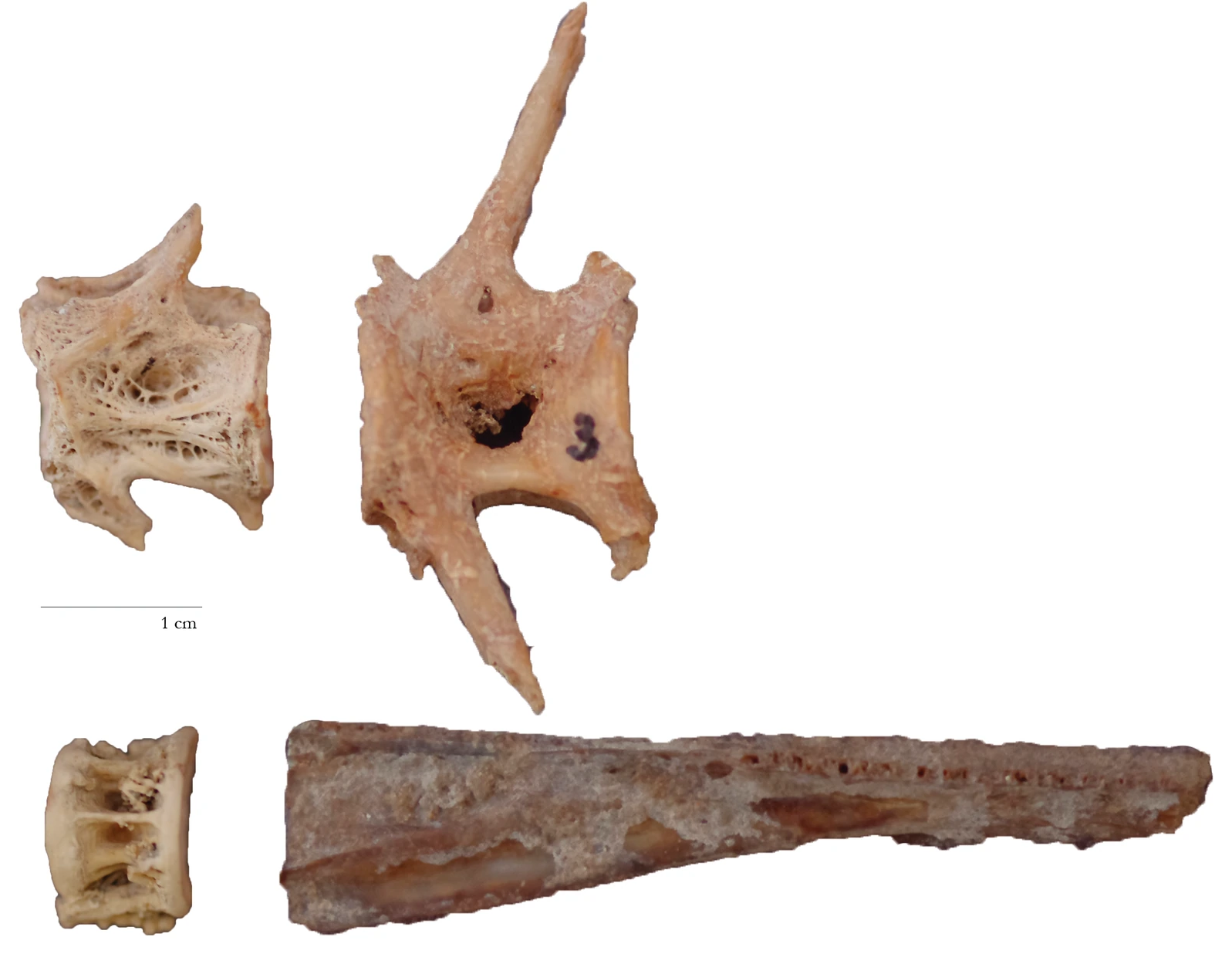
Vertebrae and other anatomical elements illustrate the diversity of the remains studied and their variation in size. Observation moves from the assemblage to individual specimens and then to the microscopic scale.
Recovering this diversity depends, among other factors, on sampling, sieving and sorting procedures. The specimens make these stages of the study tangible.

Mullet vertebra observed with a HIROX microscope, Icht’isomed² project.
Enlarge image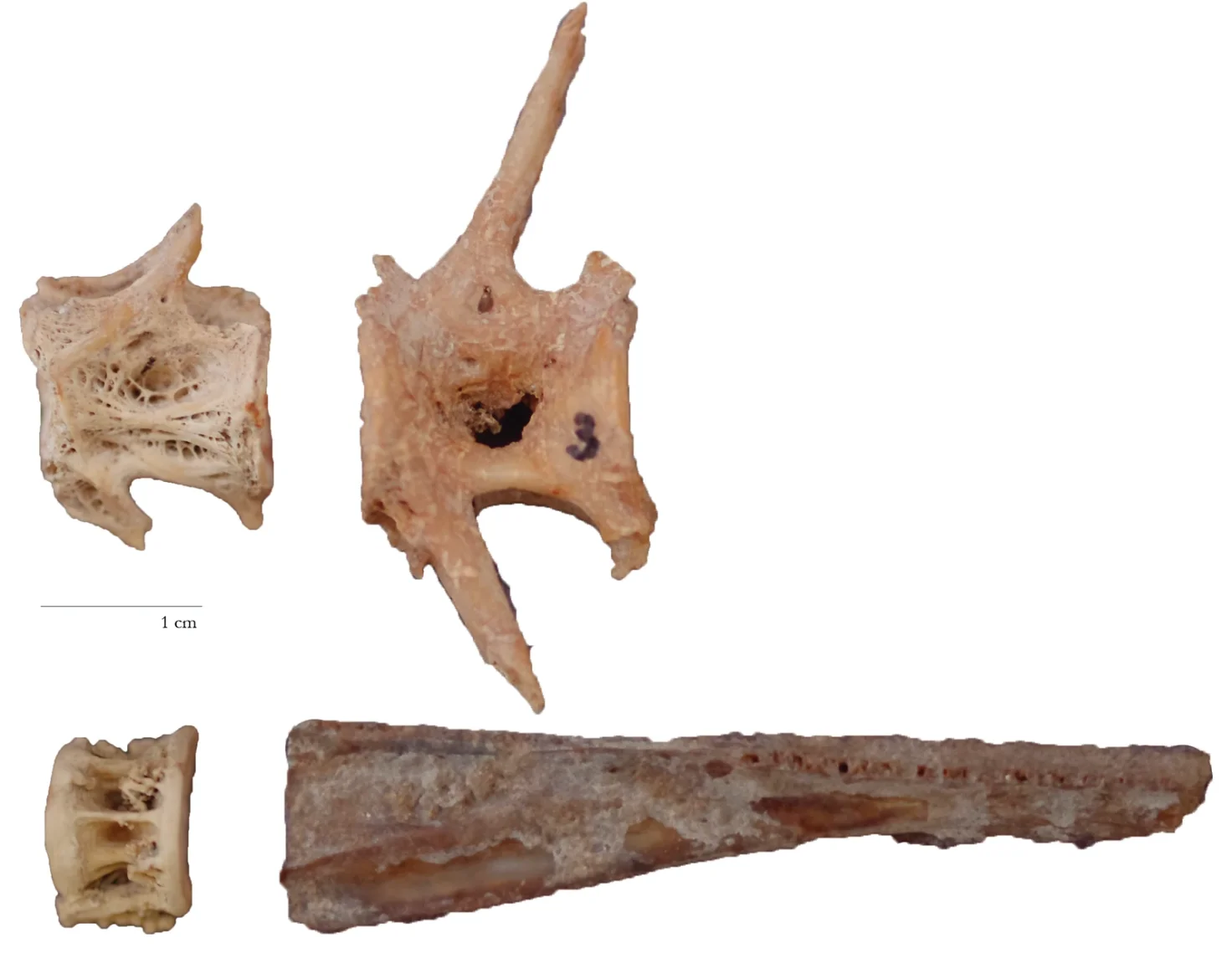
Different teleost fish vertebrae and a sectioned garfish dentary.
Enlarge image

Public references
Documentation
Le château d'Hyères, Hyères (83).
View report