Archaeoichthyology / Methods
Methods
From sampling to reporting the findings, an archaeoichthyological study follows a sequence of observation and analysis adapted to the archaeological context.
01 / The study sequence
From Sampling to Reporting
Sampling
Adapt sampling to the archaeological context and the aims of the study.
Sieving
Recover fish remains by sieving archaeological samples.
Sorting
Locate and extract fish remains from sieve residues and the assemblages being studied.
Identification
Identify the remains anatomically and taxonomically, using a reference collection where needed.
Quantification
Record and quantify the identified remains.
Analysis
Examine the composition of the assemblages and explore relationships between observations.
Interpretation
Relate the evidence to fishing practices, fish consumption and processing, and the management of aquatic resources.
Reporting
Present the findings in reports, scientific contributions or heritage interpretation suited to the project.
02 / Recovering the remains
Sieving & Sorting
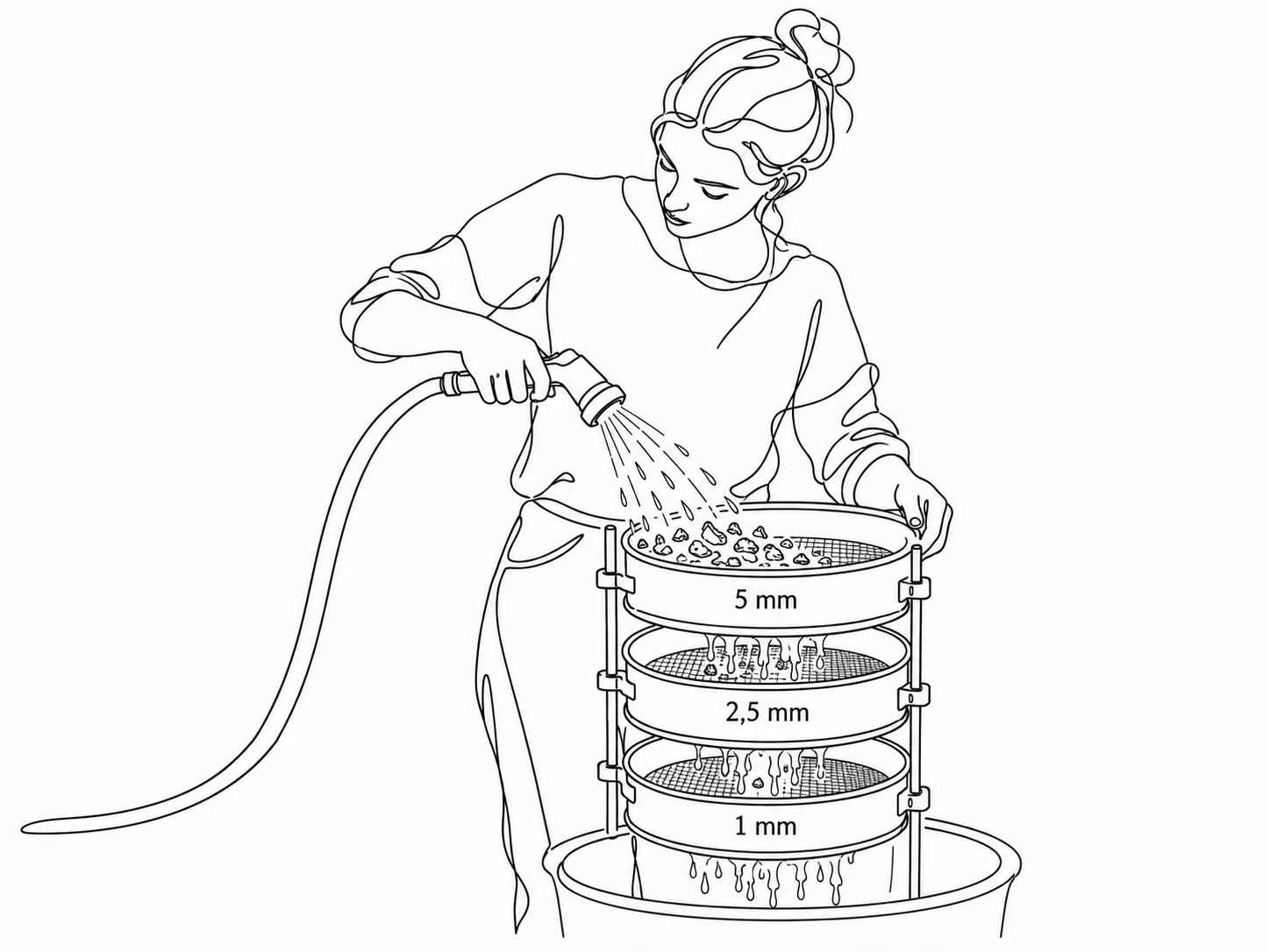
Sieving enables the recovery of fish remains from archaeological samples. Recovery methods are adapted to the context and the aims of the study.
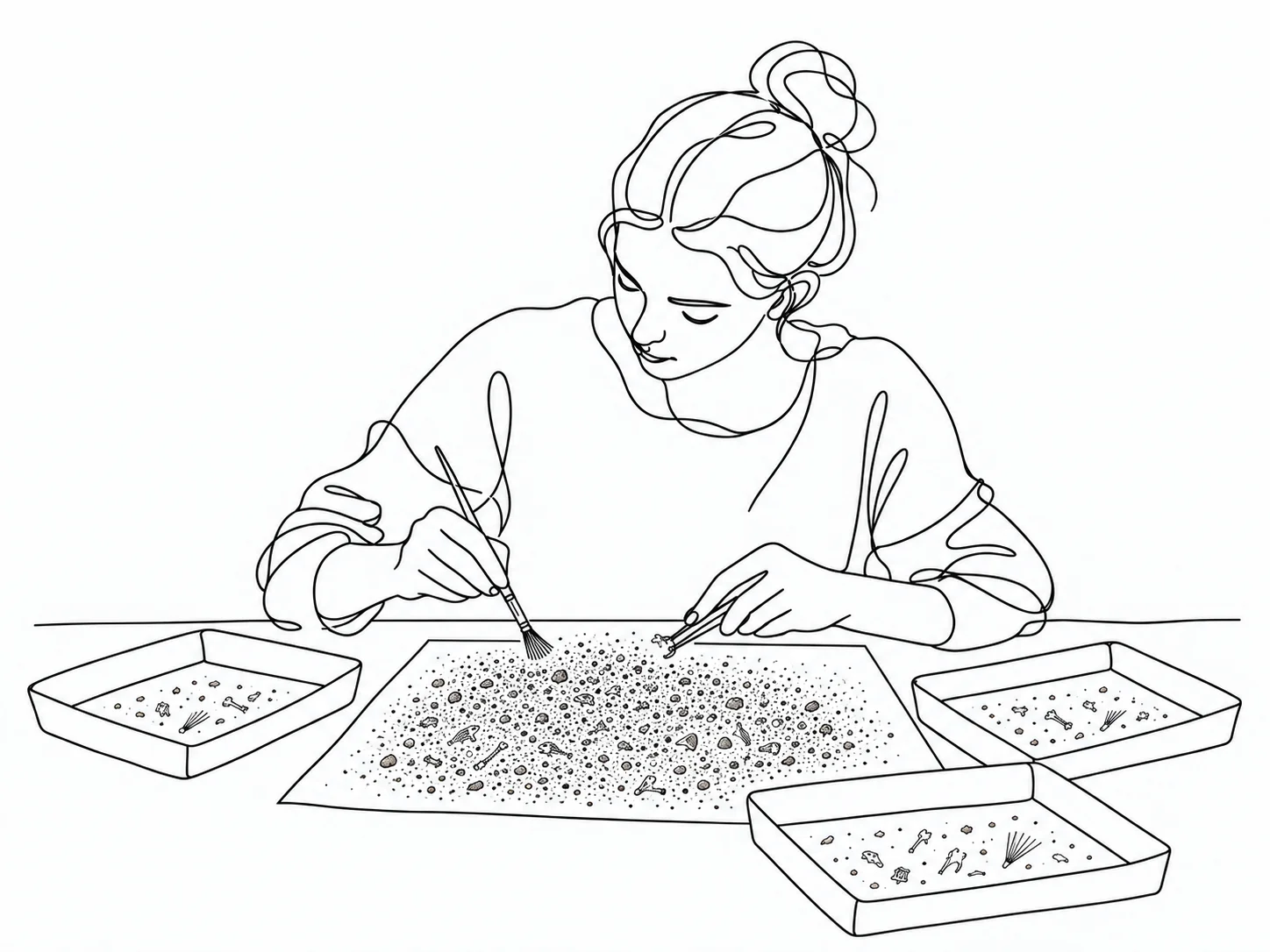
Sorting involves locating and extracting these remains from sieve residues and the assemblages being studied. Sieving and sorting can complement an archaeoichthyological study.
Pricing can be adjusted to the volume of material. Reduced rates may be considered for larger volumes.
03 / Observing and recording
Identification & Quantification

Anatomical identification establishes which part of the skeleton a remain belongs to. Taxonomic identification seeks to determine the group of fish to which it can be assigned.
A comparative or reference collection may be used where appropriate. The identified remains are then recorded and quantified to form the dataset for the study.
04 / Connecting the observations
Analysis & Interpretation
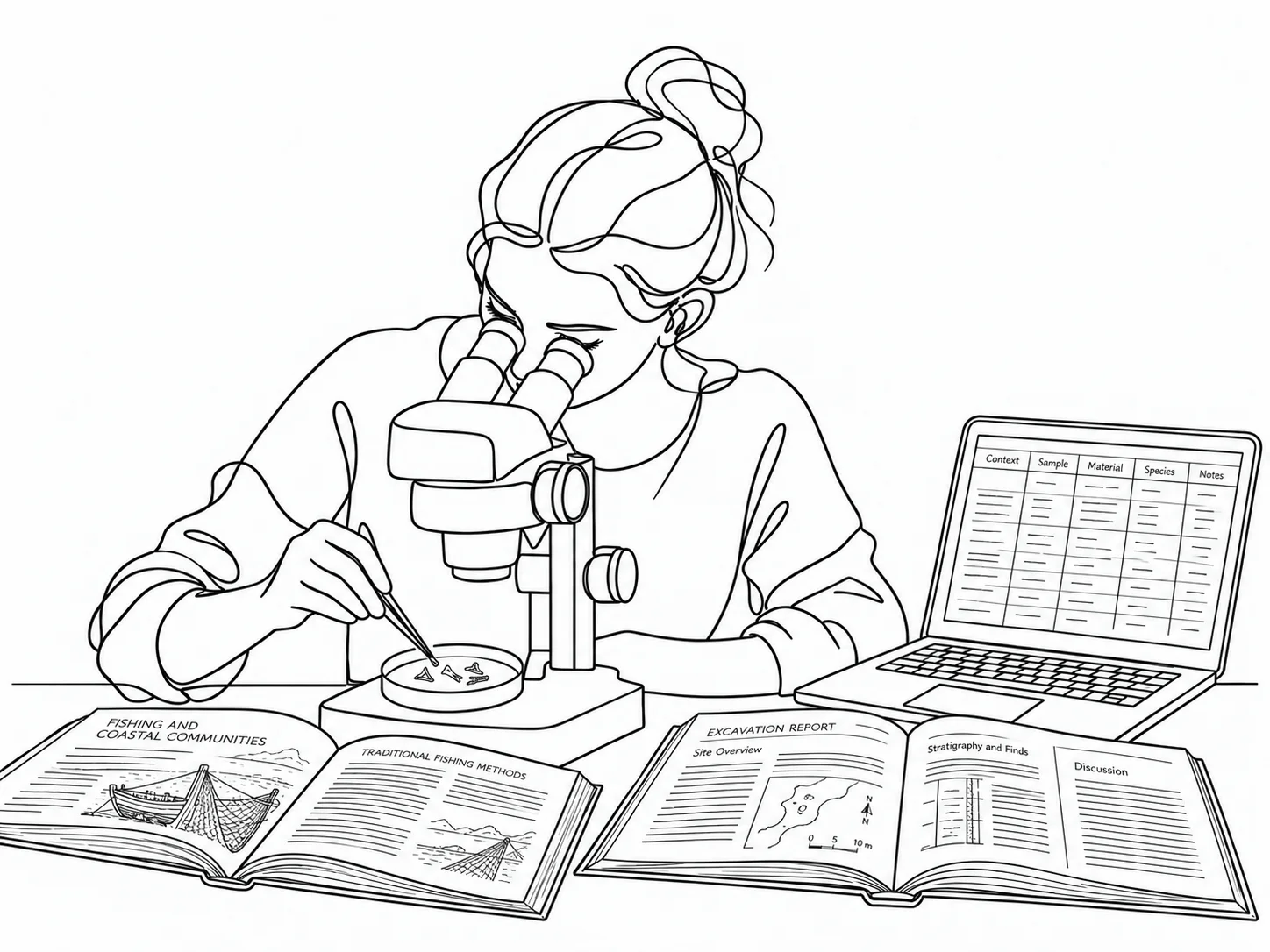
Analysis examines the composition of the assemblages and the relationships between observations. Interpretation places this evidence within its archaeological context.
These approaches can help document fishing practices, diet, fish handling and processing, and the exploitation and management of aquatic resources.
They may also shed light on interactions with aquatic environments and landscapes. The questions addressed depend on the context and the evidence available.
05 / Documenting and sharing
Reporting the Findings
The findings may be presented in a study report or incorporated into an excavation report. A scientific contribution or publication may be planned as part of the project.
Appropriate dissemination and heritage interpretation may also be considered. The format is chosen to suit the project and its audiences.
06 / Recovery & representation
Why recovery protocols matter
The recovery protocol can strongly influence the visibility of small remains and the representativeness of a corpus. Marignane and Tour de l’Acapte provide complementary examples from different archaeological contexts.
- Hand collection497
- 4 mm12,384
- 2 mm36,527
- 1 mm22,298
At Marignane, the 1 and 2 mm meshes yielded around 82% of the remains in the analytical corpus, illustrating the importance of an appropriate sieving protocol for recovering small fish remains.
At Tour de l’Acapte: a hand-collected corpus
The 22 fish remains from Tour de l’Acapte were recovered by hand, without sieving. This method can make small remains less visible. Other factors relating to the site and its deposits also contribute to the composition of the corpus.
These examples encourage a sampling and recovery strategy suited to each context, rather than a direct comparison of quantities between different sites.
Sharing practical methods
Introducing teams to sorting and recognising small remains helps them detect fish remains during fieldwork and reduces the loss of information.
Practical introductions for students, volunteers and field teams cover sediment sorting, the recognition of fish bones, sampling strategy and the choice of sieve mesh sizes.
Your project