Study / Projects & Case Studies
Aix-en-Provence — Parking Mignet, Couvent royal des Dominicaines de Notre-Dame-de-Nazareth
Aix-en-Provence · Bouches-du-Rhône
288 fish remains studied in total
Study of 288 fish remains from Parking Mignet, Couvent royal des Dominicaines de Notre-Dame-de-Nazareth: microscopic observation, remains at different scales and cut marks on large fish.
- Location
- Provence-Alpes-Côte d’Azur · France
- Documentation
- Documentation unavailable
01 / The assemblage
Study context
The corpus comes from Parking Mignet in Aix-en-Provence, associated with the Couvent royal des Dominicaines de Notre-Dame-de-Nazareth. The phase presented dates to 1292–1359.
- Dating
- 1292–1359
- Excavations
- Development-led excavation · 2000–2001 · Stéphane Bonnet (excavation director) · Service archéologique d’Aix.
- Sampling
- Spot samples: 50 L, comprising 10 L of sediment samples and 40 L of geomorphological samples.
- Sieving
- 4, 2 and 1 mm meshes.
- Corpus studied
- 288 fish remains
02 / The study
Work undertaken
Archaeoichthyological study of remains recovered through spot sampling and sieving, including anatomical identification, microscopic observation and examination of visible marks.
03 / Remains at different scales
Examining the corpus
The corpus ranges from small vertebrae examined under the microscope to elements of large fish bearing cut marks. This variation in scale highlights the importance of collection and observation methods.
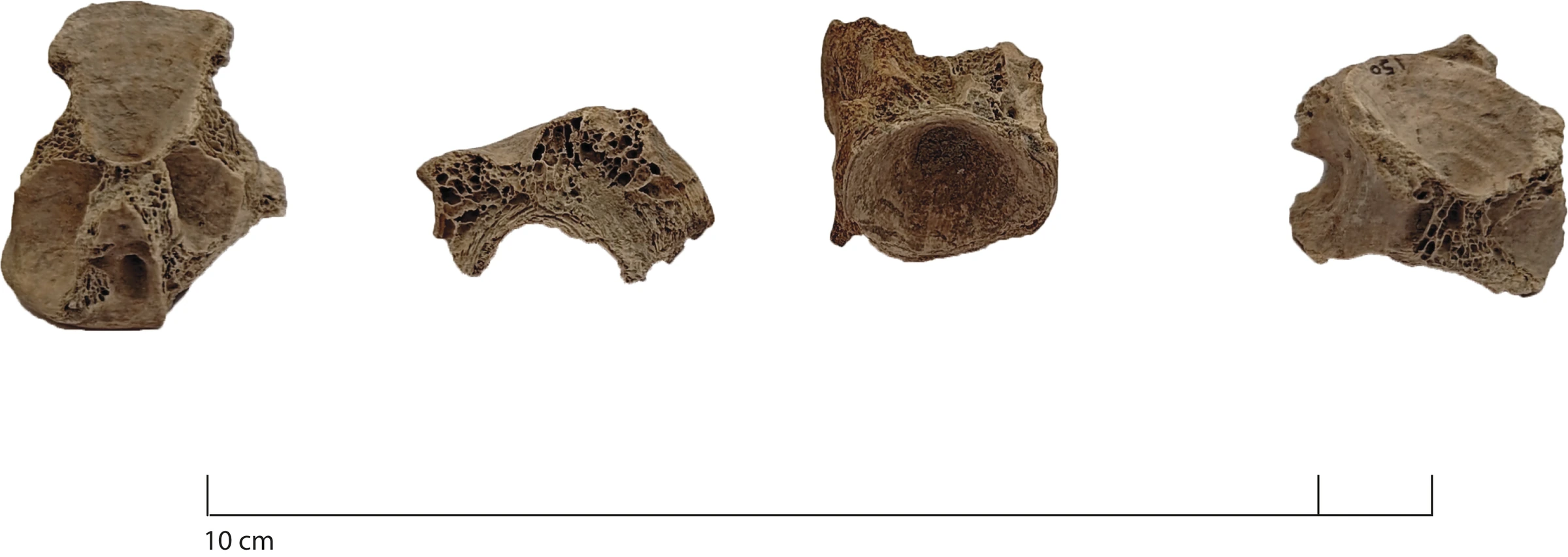
Marks visible on the tuna vertebrae document human intervention on the fish. On their own, they do not establish a specific method of preservation or preparation.
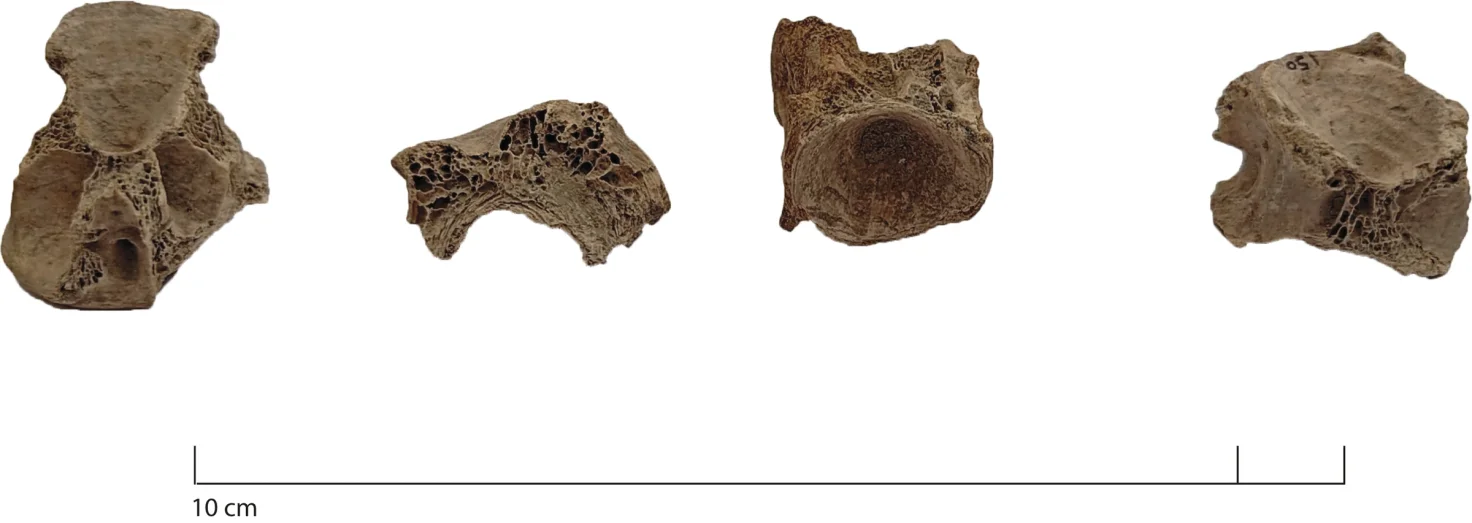
Tuna vertebrae showing different cut marks.
Enlarge image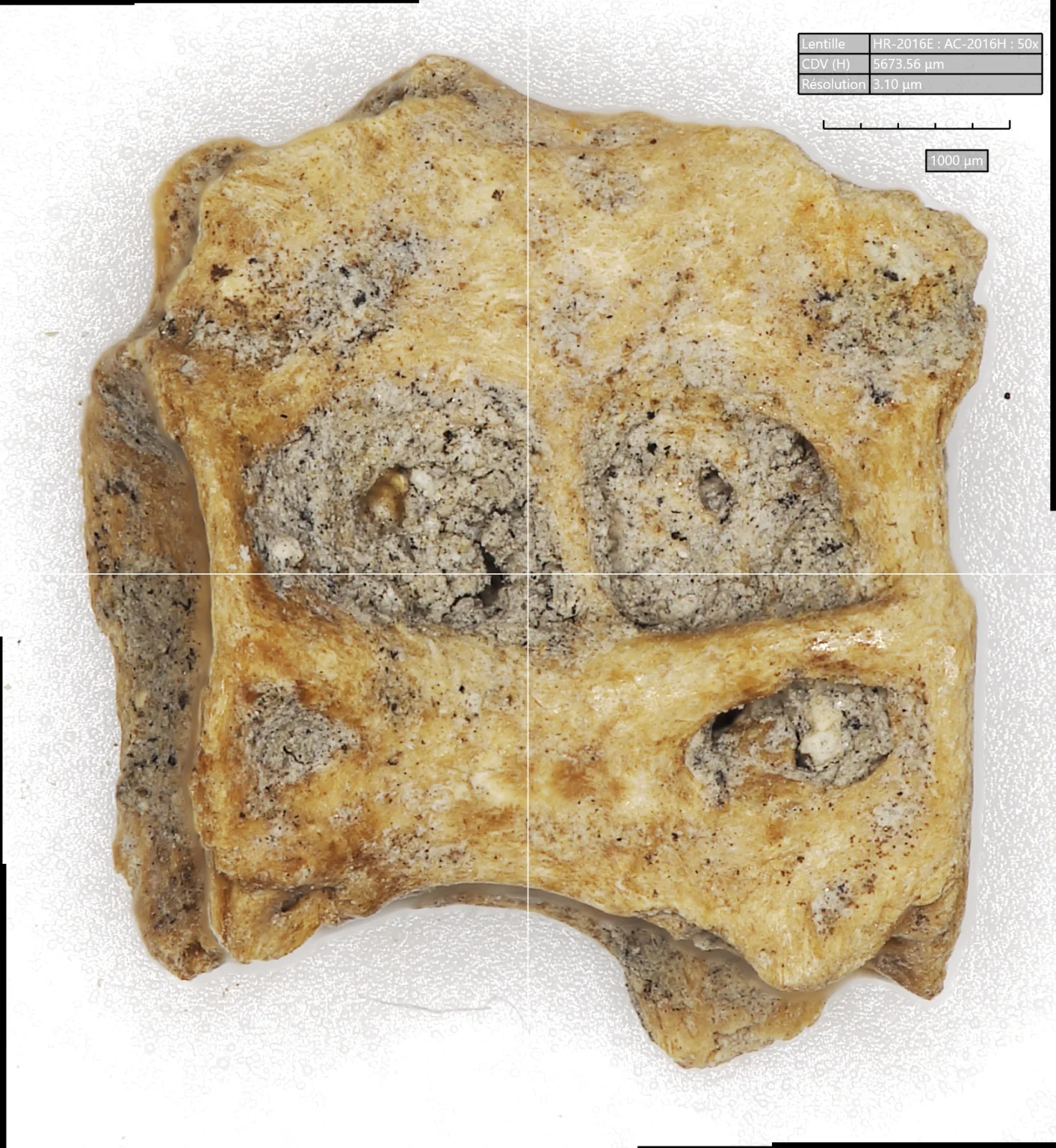
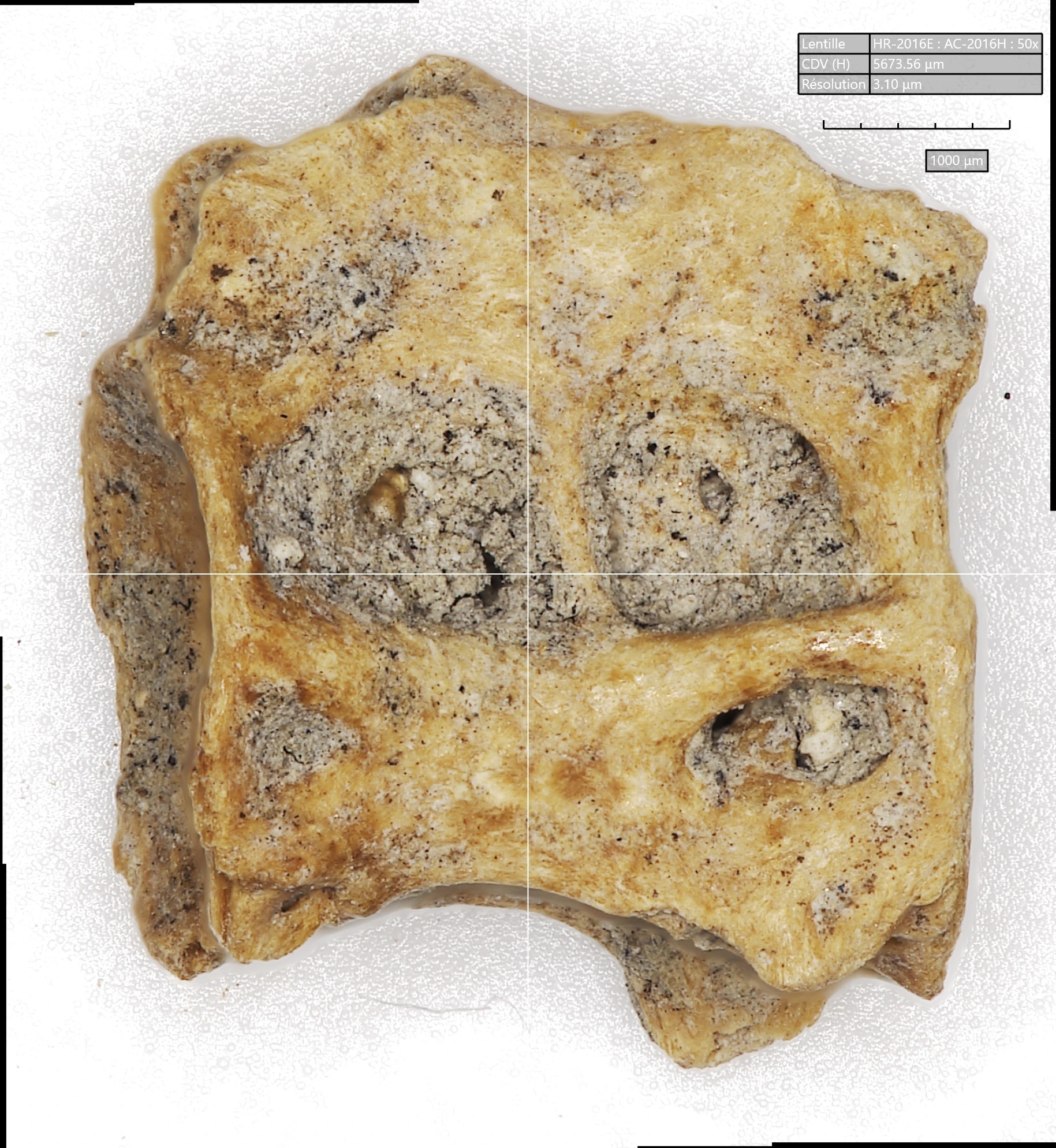
Eel vertebra observed with a HIROX microscope, Icht’isomed² project.
Enlarge image